Here's something most outbound teams never question:
They pick a target. They write copy. They send.
And somewhere in that process, buried under the campaign setup and the sequence logic and the subject line testing, there's an assumption nobody examined: this company is relevant to what we're selling, right now.
Maybe. You don't actually know.
That assumption is where most outbound dies. Not in the copy. Not in the deliverability. Before the first email goes out.
The average B2B decision-maker gets 25+ cold emails a day. Most of them get ignored on reflex - not because they're badly written, but because they land at the wrong moment, for the wrong reason, for someone who has no reason to care.
The solution most teams reach for is more: better copy, more personalization, more data.
Tools like Clay, Apollo, AI SDRs. All good tools. All solving the wrong problem.
Because the problem isn't execution. It's relevancy.
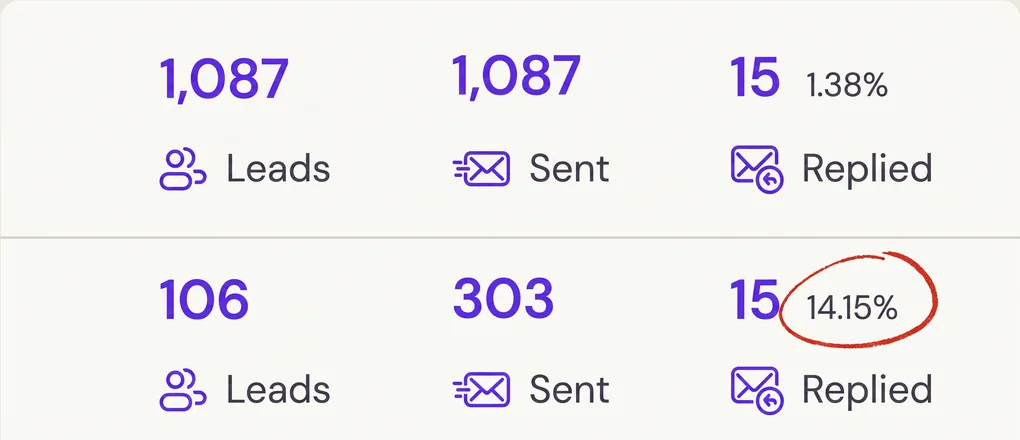
And relevancy isn't something you write your way into — it's something you earn by targeting people when something real is happening in their world.
That's what buyer signals are for.
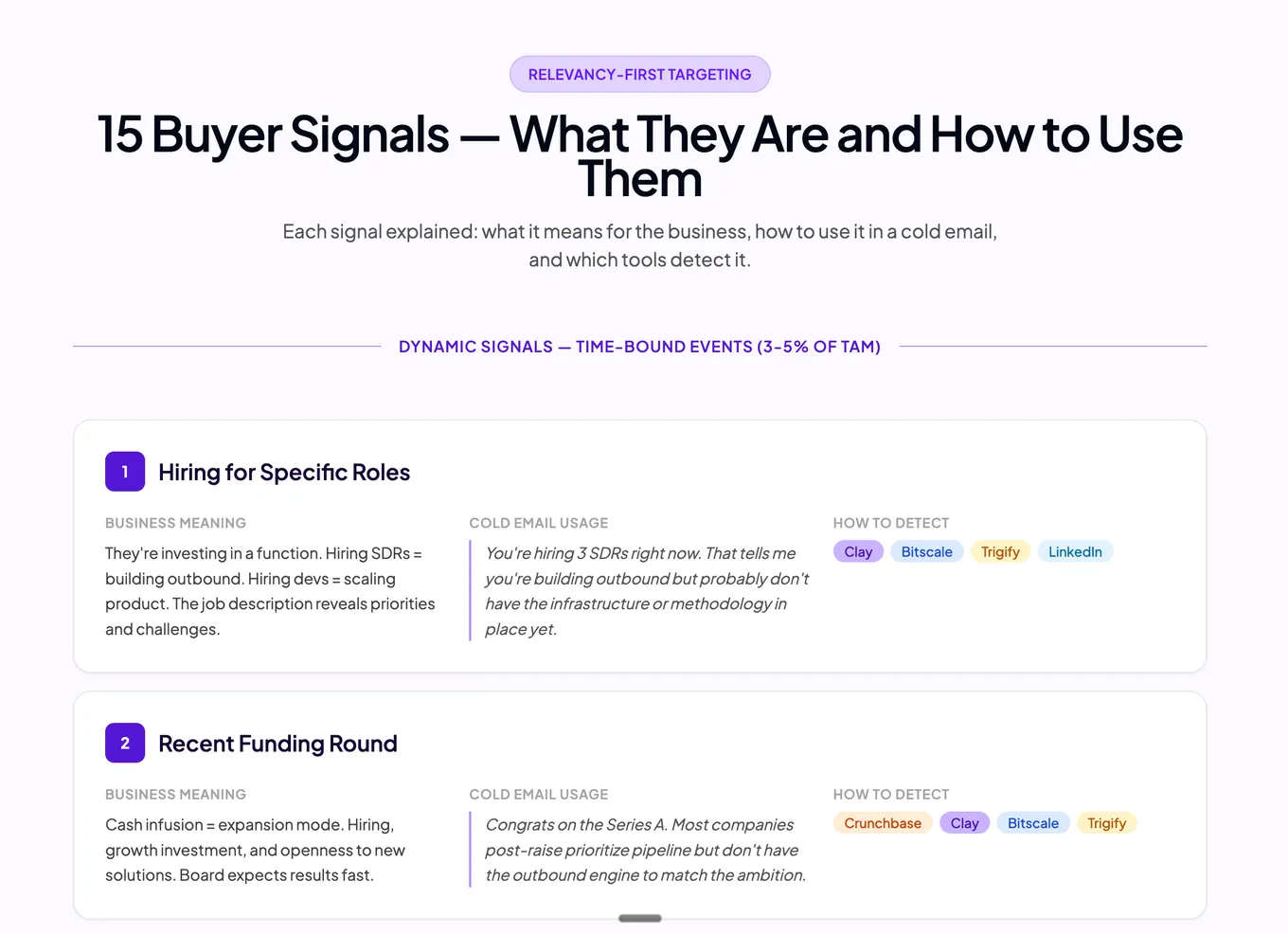
A buyer signal is an observable event that suggests a company might be in a specific situation — one where your solution is relevant right now. A leadership change. A funding round. A hiring pattern. A tech stack shift. Something that happened recently that changes the context.
The catch: signals aren't guarantees. They're hypotheses.
"They're hiring SDRs, so they probably need outbound infrastructure." Maybe. Or maybe they're building in-house and the last thing they want is an agency pitch. You don't know until you test it.
That's the part most people skip. They find a signal that sounds logical, build one campaign around it, and call it signal-based outreach. But one campaign on one signal is still just a guess.
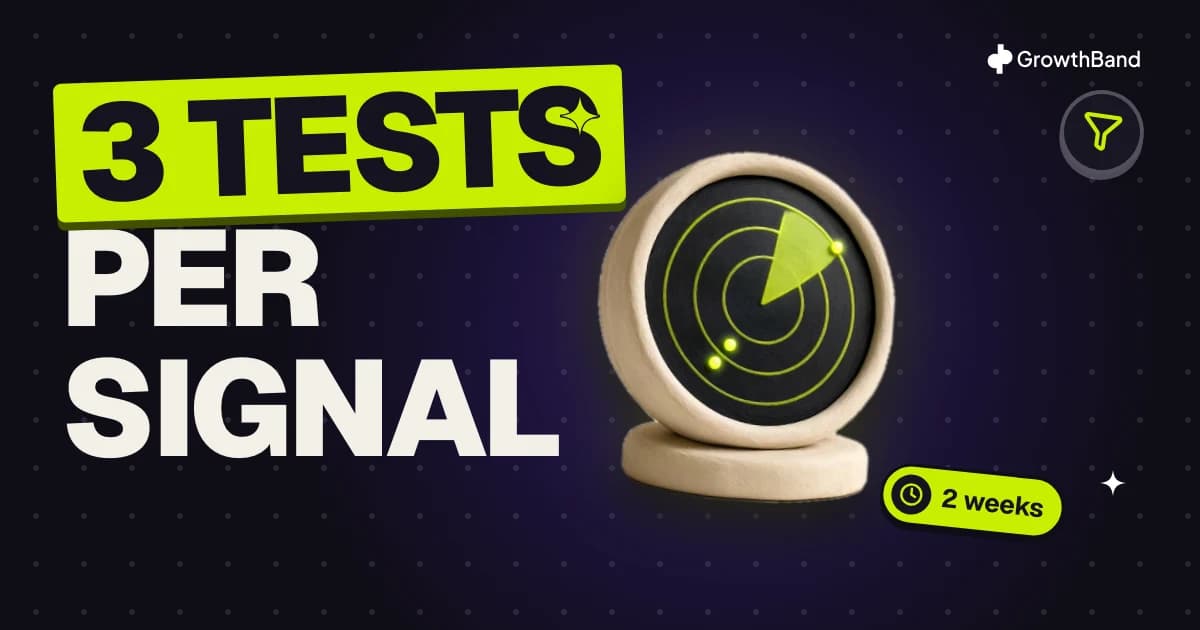
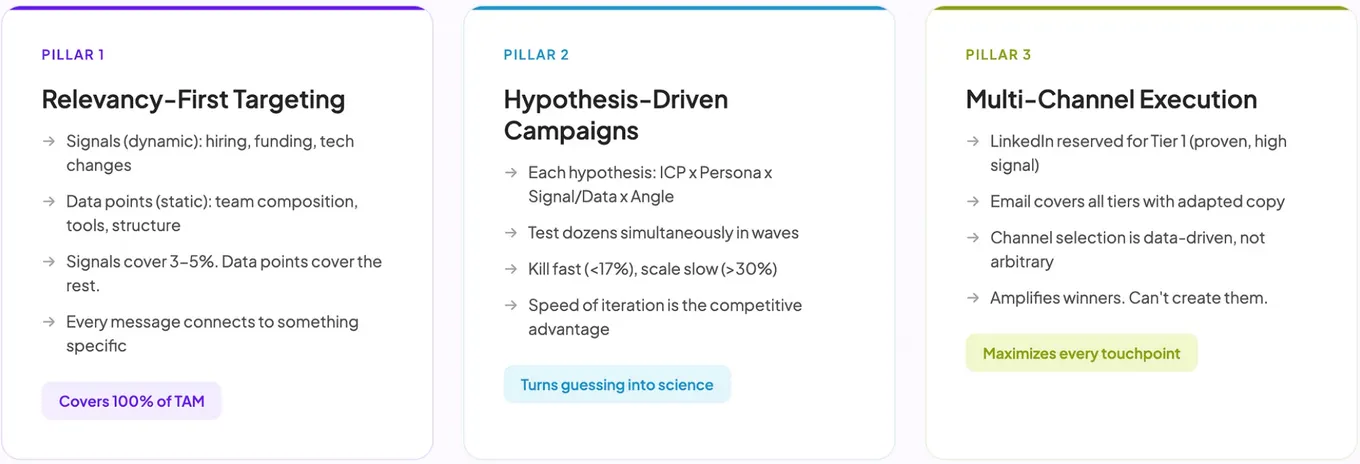
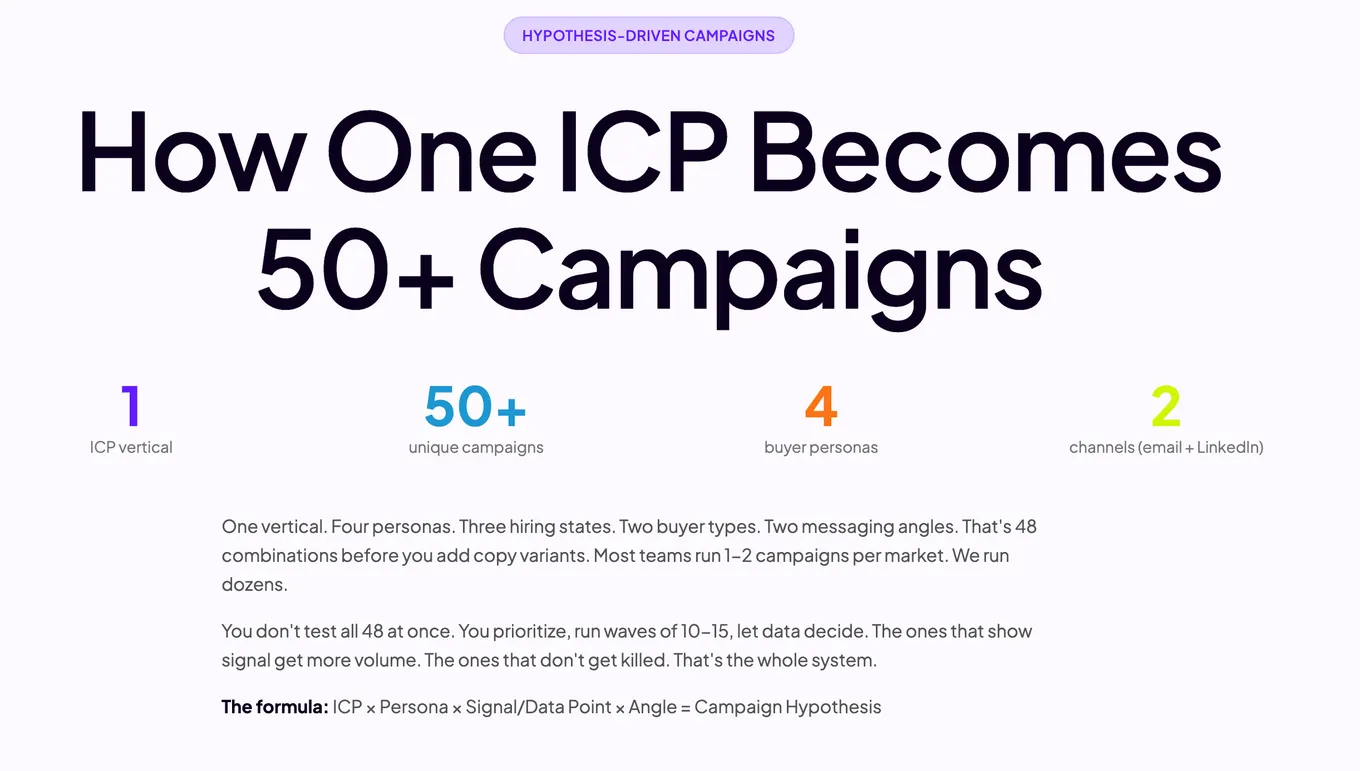
The methodology is: build 3 hypotheses per signal, run small batches, let the data decide fast. Kill what doesn't work in two weeks. Double down on what does. One ICP becomes 50+ campaigns — not because you invented 50 angles, but because you tested your way to the ones that actually work.
— Ilya
P.S. The part that surprises people most in the framework: static data points — things that are always true about a company, not things that just happened — drive more volume than dynamic signals. Most teams ignore them entirely.
Webinar recording
Talk to the team that runs this every day
Book a 30-minute call. We look at your outbound and tell you what we would change first.

Ilya AzovtsevCo-founder
Co-founder of GrowthBand. Helped scale lemlist from $20k MRR to $10M ARR and built automation at Expandi; now runs the cold email infrastructure behind 32,000+ mailboxes.